Brief overview
Pacific Resilience Hub (PRH) is a Vanuatu-based social enterprise and the home of the Canvas Model, delivering simple practical training and coaching tools that strengthen community resilience across the Pacific.
Your organisation’s goals
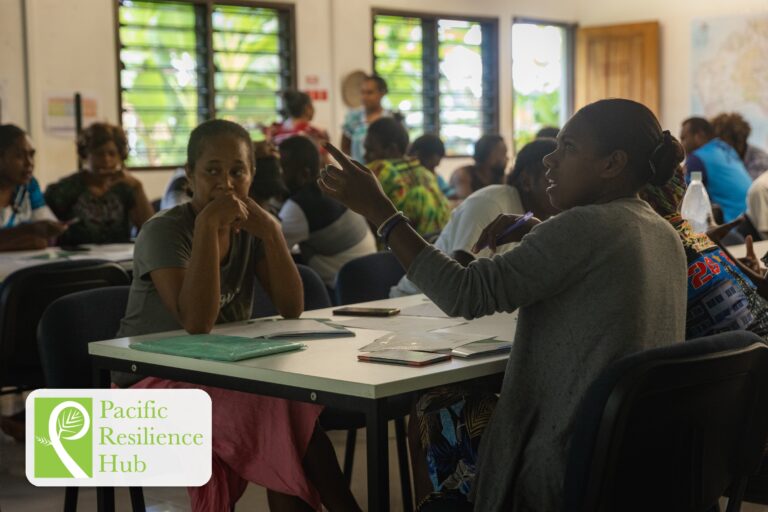
Pacific Resilience Hub delivers practical training and coaching using the Canvas Model- simple, visual, one-page tools that support individuals, families, and communities to plan and act.
Our climate and environment work is centred on the Climate Change, Environment, and Disaster Canvases, which guide communities through understanding impacts, strengthening preparedness, and identifying practical adaptation and conservation actions. These tools are grounded in local context and integrate kastom knowledge with practical planning.
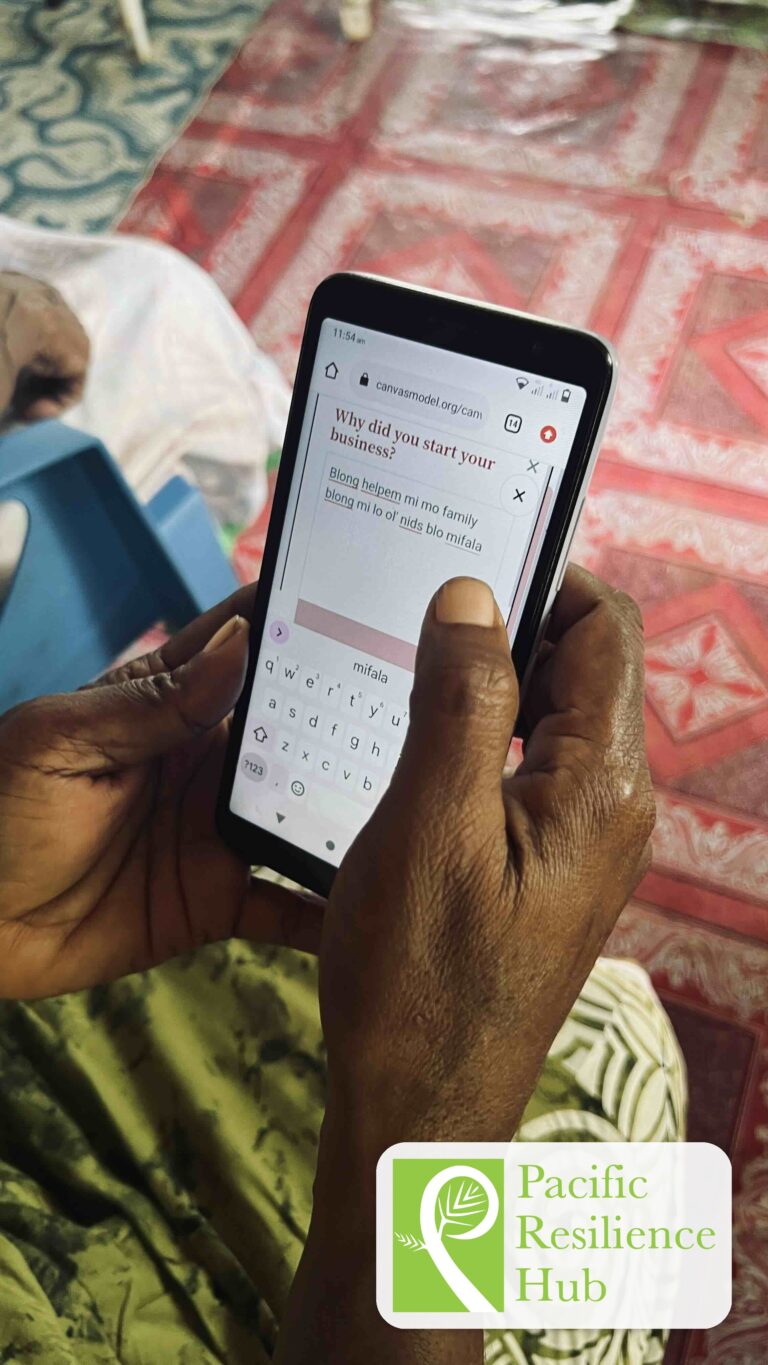
PRH works through in-person workshops, coaching, and an online platform (canvasmodel.org), allowing flexible delivery in remote and low-resource settings. Activities are designed to move participants from discussion to clear, actionable plans.
Our approach has been applied across climate resilience, natural resource management, livelihoods, and community development programs with partners including Save the Children (VCCRP), World Vision, CARE, Government Departments and multi-lateral institutions.
The model supports both community-level planning and institutional delivery, enabling governments, NGOs, and facilitators to scale practical, locally-owned responses to climate and environmental challenges.
Describe your innovation
The Climate Change Canvas is a simple, community-led planning tool that helps people understand, plan for, and respond to climate change in a practical way.
It guides users through five key areas: their vision for change, current and future climate impacts, preparedness actions, adaptation strategies, and budgeting/support. This structure helps communities move from awareness to clear, actionable plans grounded in their own context.
The innovation is strengthened through its integration with the Environment and Disaster Canvases. Together, these form a connected model that links climate adaptation with environmental management and disaster preparedness. For example, communities can identify climate risks (Climate Canvas), connect them to environmental pressures such as resource use or pollution (Environment Canvas), and plan for hazard response and recovery (Disaster Canvas).
This creates a practical, whole-of-system approach that reflects how communities actually experience climate change—not as a single issue, but as part of daily life, livelihoods, and culture.
The model has been applied across Vanuatu and the Pacific through various programs, reaching thousands of participants. Communities have used the canvases to identify risks, prioritise actions, and develop locally owned plans.
It is particularly relevant for Pacific Island Countries and Territories (PICTs) because it is simple, low-cost, culturally grounded, and adaptable across contexts—from remote rural communities to national programs. It supports participation, local ownership, and practical decision-making, which are critical for effective climate resilience in the Pacific.
How is this solution is innovative?
The innovation lies in how complex climate and environmental concepts are translated into simple, practical tools that communities can use directly. The Canvas Model breaks planning into a clear, visual structure that is easy to understand regardless of literacy level. Each canvas is supported by structured activities that guide discussion, decision-making, and action planning. This ensures participants move beyond awareness to concrete steps. A key innovation is the integration of multiple domains—climate change, environment, disaster risk, livelihoods, and family/community dynamics—within one connected framework. This reflects the reality of Pacific communities, where these issues are closely linked. The model is also designed for flexible delivery. It works as a paper-based tool in remote areas, as well as through an online platform for wider access and ongoing coaching. This hybrid approach supports both depth of engagement and scalability. Importantly, the approach is grounded in local context and values. It builds on existing knowledge, including kastom practices, rather than replacing them, and supports communities to develop their own solutions.
How can the innovation be replicated and scaled up in other PICTs?
The Canvas Model is designed to be easily replicated and scaled across Pacific contexts.
At its core, the model uses simple, standardised tools that can be adapted to different sectors and countries without losing their structure. This allows governments, NGOs, and community facilitators to integrate the canvases into existing programs with minimal additional resources.
Scaling is supported through a Training of Trainers approach, where local facilitators are trained to deliver workshops and coaching using the canvases. This builds local capacity and reduces reliance on external expertise.
The model has already been applied across Vanuatu, Solomon Islands, PNG, Timor-Leste, and Tonga through partnerships with organisations such as Save the Children, World Vision, CARE, VCCI, and labour mobility programs. This demonstrates its adaptability across different cultural and institutional contexts.
The online platform (canvasmodel.org) further supports scaling by providing access to tools, activities, and monitoring systems, while maintaining the option for fully offline delivery.
Because the tools are low-cost and easy to use, they can be embedded within existing projects, government systems, and community initiatives, enabling sustainable, long-term use beyond project timelines.
How is the solution cost‑effective and affordable in the context of Pacific Island Countries and Territories (PICTs)?
The Canvas Model is designed to be highly cost-effective and accessible in Pacific contexts.
At the community level, the tools can be delivered using simple printed materials and local facilitators, requiring minimal equipment or infrastructure. This keeps costs low and allows implementation in remote and low-resource settings.
Because the approach focuses on building local capacity, communities and organisations can continue using the canvases independently after initial training. This reduces ongoing costs and supports long-term sustainability.
The model also integrates across multiple sectors—climate change, environment, disaster risk, and livelihoods—meaning a single approach can address multiple program objectives. This improves value for money for governments and development partners.
Optional digital delivery through the Canvas platform adds further efficiency, enabling remote access, monitoring, and coaching without replacing low-cost, in-person approaches.
From an end-user perspective, the approach is affordable because it builds on existing knowledge and resources. Communities develop plans that are realistic within their own means and context, rather than relying on external or high-cost solutions.
Locations (country, island, or community) where this solution has been piloted and/or implemented
The Canvas Model has been implemented across multiple Pacific Island Countries, including:
• Vanuatu
• Solomon Islands
• Papua New Guinea
• Timor-Leste
• Tonga
Across these contexts, the model has been used in community workshops, Training of Trainers programs, and national and regional initiatives, reaching thousands of participants across climate resilience, livelihoods, and community development programs.
Learn more:
Home
About
Abyss Vanuatu Ocean Institute (AVOI) delivers integrated, science-led services focused on marine restoration, climate resilience and sustainable environmental management. Its core services include the design and deployment of Reef Ball artificial reef systems and managed vessel reefs to restore degraded marine habitats, enhance biodiversity and support fisheries recovery. AVOI also provides drone-enabled monitoring and survey services, using autonomous and manned systems to track climate impacts, support conservation planning and improve data-driven decision-making across marine and coastal environments.
A central component is the development of the Vanuatu Ocean Rangers program, which builds local workforce capability in restoration, monitoring, conservation and environmental stewardship. AVOI also supports Marine Protected Area (MPA) design, ecological baseline assessments and long-term monitoring frameworks aligned with national ocean policy objectives.
Through community engagement, eco-tourism integration and applied innovation, AVOI connects environmental protection with economic opportunity. Its Havannah Harbour pilot serves as a scalable model to deliver practical climate adaptation, strengthen ecosystem resilience and enable coordinated, whole-of-government environmental outcomes across Vanuatu.
The Innovation
One of AVOI’s key innovations is the integration of the Vanuatu Ocean Ranger program with locally delivered marine restoration systems, including Reef Ball fabrication and deployment. This model combines workforce development, community engagement and practical restoration into a single, scalable framework designed for island environments.
Through structured Vanuatu Ocean Ranger Camps, over a 3 day period AVOI identifies and trains local Ni-Vanuatu participants in marine conservation, Scientific diving, restoration techniques, monitoring and stewardship. One aspect of the Rangers responsibilities is to support the fabrication and deployment of Reef Ball artificial reef systems using locally sourced materials and regional supply chains, significantly reducing costs and increasing local ownership. The approach enables degraded reef systems to be restored while simultaneously building in-country capability and employment pathways, guided by our National AVOI Play Book at its core.
This innovation directly addresses climate change by strengthening reef resilience, supporting fisheries recovery and enhancing coastal protection against storm surge and extreme weather events. It also improves ecosystem health, which is critical for food security and long-term adaptation in Pacific Island Countries and Territories (PICTs).
What makes this model particularly relevant for PICTs is its practicality and scalability. It does not rely on high-cost external inputs but instead builds local capacity, integrates customary stewardship and aligns with government policy frameworks. The system can be replicated across islands using a consistent training, deployment and governance approach.
Supported by drone-enabled monitoring and AI self learning data collection, AVOI’s model provides a cost-effective, community-led solution that connects restoration, climate resilience and sustainable economic opportunity in a way that is both locally grounded and nationally scalable.
How is this solution innovative?
AVOI’s solution is innovative because it integrates community workforce development, marine restoration and applied technology into a single, scalable delivery model tailored for island environments. Rather than treating conservation, employment and climate adaptation as separate challenges, AVOI combines them through the Vanuatu Ocean Ranger program and locally delivered Reef Ball restoration systems. This creates a practical pathway where communities are directly trained and employed to restore and monitor their own marine ecosystems. The model also incorporates drone-enabled monitoring and emerging AI-supported survey systems to improve data collection, ecological tracking and rapid response capability, including in remote and disaster-affected areas. This blend of low-cost, locally sourced restoration methods with advanced monitoring technology allows for both accessibility and scientific rigour. What makes the approach particularly innovative is its focus on scalability and replication. By developing a standardised training, deployment and governance framework, AVOI provides a repeatable model based on a National AVOI Play book that can be adapted across Pacific Island Countries, helping translate policy into measurable, community-led climate and environmental outcomes.
How can the innovation be replicated and scaled up in other PICTs
AVOI’s model is designed for replication across Pacific Island Countries and Territories (PICTs) through a structured, partnership-driven and capacity-focused approach. Following an initial two-year proof-of-concept in Vanuatu, AVOI will develop a refined National PICT Playbook outlining standard operating procedures (SOPs) and safe work method statements (SWMS), delivered in both English and Bislama, with visual and pictorial elements to ensure accessibility across diverse communities.
Scaling will be enabled through institutional partnerships with government agencies, regional bodies, scientific partners such as UTS, and local stakeholders, supported by blended financing models including public-private partnerships, eco-tourism revenue streams and conservation funding.
A key component is the development of a simplified, citizen science-based survey framework focused on key indicator species. This approach lowers technical barriers, enabling participation from communities with varying levels of formal education while strengthening data collection and stewardship.
By combining local workforce training, accessible science, and standardised systems, AVOI creates a practical, low-cost model that can be adapted regionally, empowering communities while supporting climate resilience, biodiversity restoration and sustainable economic development across PICTs.
Is your solution cost‑effective and affordable in the context of Pacific Island Countries and Territories (PICTs)?
AVOI’s solution is designed to be highly cost-effective and affordable for communities, local governments and small operators across PICTs. A core principle of the model is the use of locally available materials, including aggregates from regional quarries and, where appropriate, surplus or repurposed government materials. This significantly reduces construction and deployment costs for Reef Ball systems and associated infrastructure.
From an end-user perspective, the model lowers financial barriers by building local capability through the Vanuatu Ocean Ranger Camp Initiative and subsequent program, reducing reliance on external expertise and enabling communities to deliver and maintain restoration activities themselves. The integration of eco-tourism also creates revenue-generating opportunities that can help offset ongoing costs.
Affordability is further strengthened through the development of a streamlined cross-departmental approval pathway within the AVOI Playbook. By providing clear guidance on site selection, environmental considerations and standardised processes, local governments can reduce delays, duplication and administrative costs, enabling more efficient project delivery at scale.
Together, these elements create a low-cost, accessible and sustainable model that is practical for widespread adoption across PICTs.
Where is this being piloted?
AVOI’s solution is being piloted in Vanuatu, with Havannah Harbour (North-West Efate) identified as the primary proof-of-concept site, supported by a permanent operational and training hub at Lot 149, Lapita Estate. While over 1,000,000 Reef Balls have been deployed globally across more than 80 countries, this will be the first integrated deployment of this system in Vanuatu. The pilot combines initial baseline surveys across 12 regions using Reef Life Survey (RLS Methodology) prior to any deployments. Once 6 of the sites are selected for deployment we will deploy 50m x 10m of Reef Ball habitat restoration—designed as a 500+ year solution—, allowing us to. Continue to conduct 6 monthly replicated surveys in exactly the same 50m transects to demonstrate recruitment changes providing proof of concept. Together with the Vanuatu Ocean Ranger program, which trains and employs local Ni-Vanuatu to deliver restoration, monitoring and stewardship, supported by drone-enabled surveying, community engagement and eco-tourism integration. The approach is intentionally holistic, linking marine restoration, climate resilience, workforce development, local supply chains and government coordination into a single, place-based model. The Havannah Harbour pilot will be used to refine systems, demonstrate measurable outcomes and establish a scalable framework for national and regional replication across PICTs, through the development of our AVOI National Playbook, helping guide replication across all our satellite sites. Initial training will be conducted through AVOI Headquarters in Havannah Harbour, with Ranger selection conducted through a multi-day conservation camp where participant will all leave with new knowledge and appreciation for the terrestrial and marine environment, and Ocean Rangers selected for employment within the AVOI team at the conclusion of the camps.
There was a problem reporting this post.
Please confirm you want to block this member.
You will no longer be able to:
Please note: This action will also remove this member from your connections and send a report to the site admin. Please allow a few minutes for this process to complete.