Brief overview
Estuari is a social enterprise working across the Pacific to strengthen climate resilience through integrated engineering, data, and community-led approaches. We specialise in bridging STEM innovation with locally grounded humanitarian and development practice. Our work focuses on climate-resilient infrastructure that is accessible to all, including early warning systems, nature-based solutions, water, wastewater and flood management, ensuring solutions are technically robust and socially equitable. Through partnerships with research institutions, governments, and communities, Estuari supports the design, pilot, and scale-up of practical innovations that reduce disaster risk and enhance the adaptive capacity of Pacific communities and institutions.
Your organisation’s goals
Estuari delivers integrated services across climate resilience, water security, and disaster risk reduction, with a focus on practical implementation in complex environments. Our core services include:
– Climate-resilient infrastructure: Technical advisory and design support for water, sanitation, and community infrastructure that is robust to climate variability and extreme events.
– Early warning systems and anticipatory action: Design and strengthening of multi-hazard early warning systems that enable timely, locally relevant decision-making. This includes hydrological analysis, data integration, impact analysis, and community-centred communication systems.
– Climate and environmental analytics: Application of emerging technologies, including remote sensing and AI-enabled modelling, to improve understanding of climate risks and environmental change.
– Community engagement and co-design: Ensuring solutions are locally led, culturally appropriate, and aligned with community priorities, including safeguarding Indigenous knowledge.
– Partnership development and systems strengthening: Facilitating collaboration between governments, private sector, research institutions, and civil society to deliver scalable climate solutions.
Across all services, Estuari emphasises equitable outcomes, recognising that climate impacts are disproportionately experienced by marginalised groups and that solutions must be inclusive by design.
Describe your innovation
Estuari’s flagship innovation is its Early Warnings for All (EW4A) Systems Partnership, integrating advanced sensing technologies with community-led early warning systems.
The innovation combines:
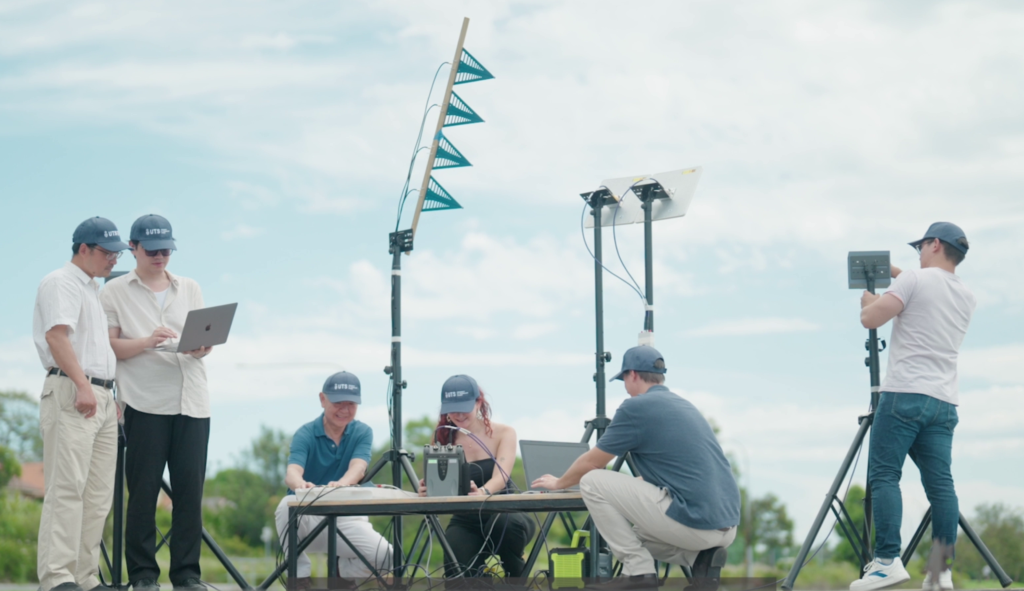
– Real-time environmental sensing using telecommunications networks (in partnership with the UTS Network Sensing Lab), which transforms existing mobile infrastructure into distributed sensors for rainfall, water levels, and flood dynamics.
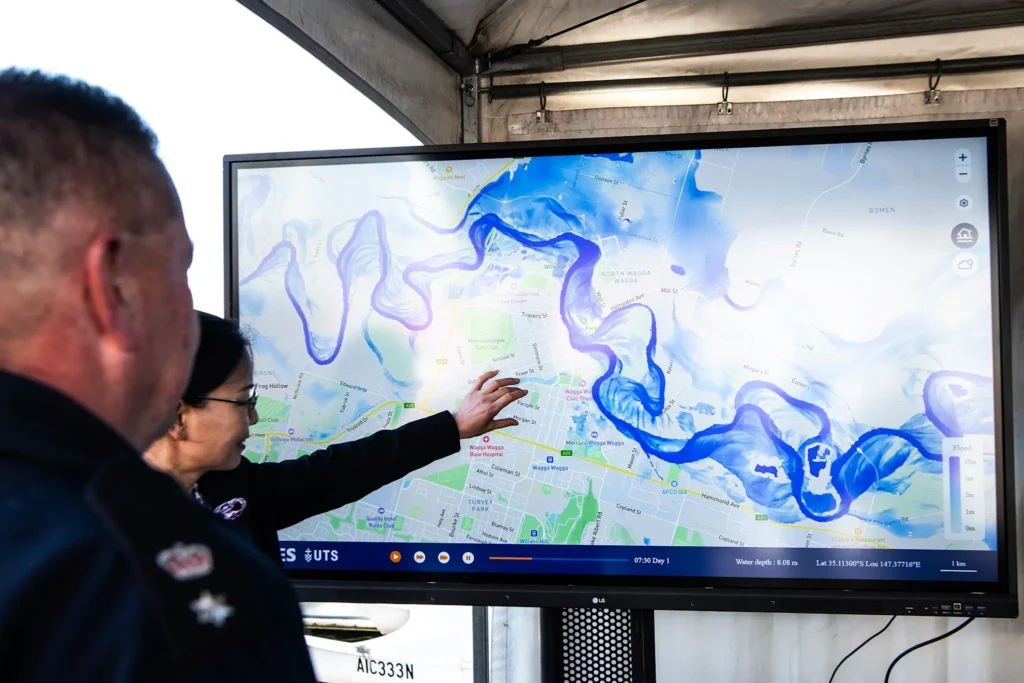
– AI-enabled flood prediction and digital twin modelling, providing high-resolution, real-time forecasts of flood extent and impacts.
– Multi-hazard data integration and impact analysis, linking environmental data with social vulnerability to identify who and what is most at risk.
– Two-way, community-centred communication systems, ensuring warnings are actionable, accessible, and aligned with local knowledge and priorities.
This innovation directly addresses climate change challenges by improving preparedness for increasingly frequent and intense climate-driven hazards such as floods and cyclones. Profoundly, this is achieved through the use of existing telecommunications infrastructure, minimising the need for investment in new, standalone meteorological and sensor hardware that is costly and difficult to maintain.
For Pacific Island Countries and Territories, the solution is particularly relevant due to:
– Directly addresses Pacific Countries and Territories’ high exposure to climate hazards.
– Highly cost-effective, leveraging telecommunications infrastructure already in place across the Pacific.
– Addresses the challenge of geographic dispersion of communities, especially in island communities.
– Readily scalable.
– Complements existing early warnings systems, and readily integrates local knowledge.
By integrating cutting-edge technology with locally led systems, EW4A enables earlier, more equitable, and more effective responses, reducing loss of life, protecting livelihoods, and strengthening long-term climate resilience.
How is this solution is innovative?
This solution is innovative in three key ways:
(1) Infrastructure-as-sensor approach: Rather than deploying new monitoring equipment, the system uses existing mobile networks as environmental sensors. Changes in signal behaviour (e.g. during rainfall or flooding) are analysed to generate real-time environmental data, significantly reducing cost and complexity.
(2) Integration of AI and physical modelling: The solution combines hydrodynamic models with advanced AI (e.g. transformer-based models) to deliver high-resolution, real-time flood predictions. This hybrid approach overcomes limitations of both traditional modelling (slow) and purely data-driven approaches (data scarcity).
(3) Human-centred system design: Unlike purely technical solutions, EW4A embeds community knowledge, local governance, and two-way communication.
It prioritises accessibility, inclusion, and cultural appropriateness, ensuring warnings translate into action.
The innovation lies not just in the technology, but in the integration of STEM, local knowledge, and institutional collaboration into a single, scalable system.
How can the innovation be replicated and scaled up in other PICTs?
The innovation is highly replicable across PICTs due to its leveraging of existing Pacific infrastructure and modular design.
Institutional partnerships. Scaling requires collaboration with:
– Mobile network operators (for access to network data)
– National meteorological and disaster management agencies
– Regional organisations
– Local communities and civil society
Technical scalability
– The core technology can be adapted to new geographies with limited modification, as demonstrated by its applicability across different river systems and environments.
Financing models. Blended financing approaches are suitable, including:
– Public sector investment (e.g. disaster risk reduction, climate adaptation funds)
– Donor funding (e.g. climate finance, development partners)
– Private sector partnerships (e.g. telecommunications, insurance)
Capacity strengthening focuses on:
– Data interpretation and decision-making at national and local levels
– Community engagement for effective early action
– Technical training for system maintenance and adaptation
Estuari’s partnership model supports this process by aligning research institutions, governments, and communities to co-develop and scale solutions sustainably.
How is the solution cost‑effective and affordable in the context of Pacific Island Countries and Territories (PICTs)?
The inherent cost-effectiveness of this innovation is one of it’s primary value-adds, leveraging existing infrastructure and thus avoiding the high capital and maintenance costs associated with traditional sensor networks.
From an end-user perspective:
Communities:
– Receive earlier, more accurate warnings without needing to invest in equipment
– Benefit from reduced loss of assets, livelihoods, and lives
– Access information through familiar, accessible communication channels
Local governments:
– Avoid large upfront infrastructure investments
– Gain access to real-time, high-resolution data for decision-making
– Improve efficiency of disaster response and resource allocation
MSMEs and private sector:
– Reduced disruption from climate events
– Opportunities to integrate risk information into business planning
Evidence shows that early warning and anticipatory action systems deliver strong economic returns, with significantly reduced disaster losses relative to investment.
By combining low-cost sensing, scalable analytics for island contexts, and community-centred delivery, the solution promotes affordability and maximises impact, making it well-suited to the financial and operational realities of PICTs.
Locations (country, island, or community) where this solution has been piloted and/or implemented
The solution has been successfully piloted in Australia, and is technologically ready for scaling across the Pacific. The pilot is featured on the website of our partner, the UTS Network Sensing Lab: https://www.uts.edu.au/research/centres/network-sensing-lab
Learn more:
TV news feature on 9 News Sydney – https://www.youtube.com/watch?v=aAuOPuiNCWM)
About
Abyss Vanuatu Ocean Institute (AVOI) delivers integrated, science-led services focused on marine restoration, climate resilience and sustainable environmental management. Its core services include the design and deployment of Reef Ball artificial reef systems and managed vessel reefs to restore degraded marine habitats, enhance biodiversity and support fisheries recovery. AVOI also provides drone-enabled monitoring and survey services, using autonomous and manned systems to track climate impacts, support conservation planning and improve data-driven decision-making across marine and coastal environments.
A central component is the development of the Vanuatu Ocean Rangers program, which builds local workforce capability in restoration, monitoring, conservation and environmental stewardship. AVOI also supports Marine Protected Area (MPA) design, ecological baseline assessments and long-term monitoring frameworks aligned with national ocean policy objectives.
Through community engagement, eco-tourism integration and applied innovation, AVOI connects environmental protection with economic opportunity. Its Havannah Harbour pilot serves as a scalable model to deliver practical climate adaptation, strengthen ecosystem resilience and enable coordinated, whole-of-government environmental outcomes across Vanuatu.
The Innovation
One of AVOI’s key innovations is the integration of the Vanuatu Ocean Ranger program with locally delivered marine restoration systems, including Reef Ball fabrication and deployment. This model combines workforce development, community engagement and practical restoration into a single, scalable framework designed for island environments.
Through structured Vanuatu Ocean Ranger Camps, over a 3 day period AVOI identifies and trains local Ni-Vanuatu participants in marine conservation, Scientific diving, restoration techniques, monitoring and stewardship. One aspect of the Rangers responsibilities is to support the fabrication and deployment of Reef Ball artificial reef systems using locally sourced materials and regional supply chains, significantly reducing costs and increasing local ownership. The approach enables degraded reef systems to be restored while simultaneously building in-country capability and employment pathways, guided by our National AVOI Play Book at its core.
This innovation directly addresses climate change by strengthening reef resilience, supporting fisheries recovery and enhancing coastal protection against storm surge and extreme weather events. It also improves ecosystem health, which is critical for food security and long-term adaptation in Pacific Island Countries and Territories (PICTs).
What makes this model particularly relevant for PICTs is its practicality and scalability. It does not rely on high-cost external inputs but instead builds local capacity, integrates customary stewardship and aligns with government policy frameworks. The system can be replicated across islands using a consistent training, deployment and governance approach.
Supported by drone-enabled monitoring and AI self learning data collection, AVOI’s model provides a cost-effective, community-led solution that connects restoration, climate resilience and sustainable economic opportunity in a way that is both locally grounded and nationally scalable.
How is this solution innovative?
AVOI’s solution is innovative because it integrates community workforce development, marine restoration and applied technology into a single, scalable delivery model tailored for island environments. Rather than treating conservation, employment and climate adaptation as separate challenges, AVOI combines them through the Vanuatu Ocean Ranger program and locally delivered Reef Ball restoration systems. This creates a practical pathway where communities are directly trained and employed to restore and monitor their own marine ecosystems. The model also incorporates drone-enabled monitoring and emerging AI-supported survey systems to improve data collection, ecological tracking and rapid response capability, including in remote and disaster-affected areas. This blend of low-cost, locally sourced restoration methods with advanced monitoring technology allows for both accessibility and scientific rigour. What makes the approach particularly innovative is its focus on scalability and replication. By developing a standardised training, deployment and governance framework, AVOI provides a repeatable model based on a National AVOI Play book that can be adapted across Pacific Island Countries, helping translate policy into measurable, community-led climate and environmental outcomes.
How can the innovation be replicated and scaled up in other PICTs
AVOI’s model is designed for replication across Pacific Island Countries and Territories (PICTs) through a structured, partnership-driven and capacity-focused approach. Following an initial two-year proof-of-concept in Vanuatu, AVOI will develop a refined National PICT Playbook outlining standard operating procedures (SOPs) and safe work method statements (SWMS), delivered in both English and Bislama, with visual and pictorial elements to ensure accessibility across diverse communities.
Scaling will be enabled through institutional partnerships with government agencies, regional bodies, scientific partners such as UTS, and local stakeholders, supported by blended financing models including public-private partnerships, eco-tourism revenue streams and conservation funding.
A key component is the development of a simplified, citizen science-based survey framework focused on key indicator species. This approach lowers technical barriers, enabling participation from communities with varying levels of formal education while strengthening data collection and stewardship.
By combining local workforce training, accessible science, and standardised systems, AVOI creates a practical, low-cost model that can be adapted regionally, empowering communities while supporting climate resilience, biodiversity restoration and sustainable economic development across PICTs.
Is your solution cost‑effective and affordable in the context of Pacific Island Countries and Territories (PICTs)?
AVOI’s solution is designed to be highly cost-effective and affordable for communities, local governments and small operators across PICTs. A core principle of the model is the use of locally available materials, including aggregates from regional quarries and, where appropriate, surplus or repurposed government materials. This significantly reduces construction and deployment costs for Reef Ball systems and associated infrastructure.
From an end-user perspective, the model lowers financial barriers by building local capability through the Vanuatu Ocean Ranger Camp Initiative and subsequent program, reducing reliance on external expertise and enabling communities to deliver and maintain restoration activities themselves. The integration of eco-tourism also creates revenue-generating opportunities that can help offset ongoing costs.
Affordability is further strengthened through the development of a streamlined cross-departmental approval pathway within the AVOI Playbook. By providing clear guidance on site selection, environmental considerations and standardised processes, local governments can reduce delays, duplication and administrative costs, enabling more efficient project delivery at scale.
Together, these elements create a low-cost, accessible and sustainable model that is practical for widespread adoption across PICTs.
Where is this being piloted?
AVOI’s solution is being piloted in Vanuatu, with Havannah Harbour (North-West Efate) identified as the primary proof-of-concept site, supported by a permanent operational and training hub at Lot 149, Lapita Estate. While over 1,000,000 Reef Balls have been deployed globally across more than 80 countries, this will be the first integrated deployment of this system in Vanuatu. The pilot combines initial baseline surveys across 12 regions using Reef Life Survey (RLS Methodology) prior to any deployments. Once 6 of the sites are selected for deployment we will deploy 50m x 10m of Reef Ball habitat restoration—designed as a 500+ year solution—, allowing us to. Continue to conduct 6 monthly replicated surveys in exactly the same 50m transects to demonstrate recruitment changes providing proof of concept. Together with the Vanuatu Ocean Ranger program, which trains and employs local Ni-Vanuatu to deliver restoration, monitoring and stewardship, supported by drone-enabled surveying, community engagement and eco-tourism integration. The approach is intentionally holistic, linking marine restoration, climate resilience, workforce development, local supply chains and government coordination into a single, place-based model. The Havannah Harbour pilot will be used to refine systems, demonstrate measurable outcomes and establish a scalable framework for national and regional replication across PICTs, through the development of our AVOI National Playbook, helping guide replication across all our satellite sites. Initial training will be conducted through AVOI Headquarters in Havannah Harbour, with Ranger selection conducted through a multi-day conservation camp where participant will all leave with new knowledge and appreciation for the terrestrial and marine environment, and Ocean Rangers selected for employment within the AVOI team at the conclusion of the camps.
There was a problem reporting this post.
Please confirm you want to block this member.
You will no longer be able to:
Please note: This action will also remove this member from your connections and send a report to the site admin. Please allow a few minutes for this process to complete.