
The Pacific Innovation Forum for Climate and Environment (PIFCE) 1st - 3rd July, 2026

Brief overview
The Greater Good Diaper Project is a mission-driven social enterprise eliminating plastic diaper waste in Pacific Small Island Developing States through an integrated compostable diaper and service model: deliver, collect, compost. Founded by Dr Jason Graham-Nye and Kim Graham-Nye, the organisation operates in Samoa and is launching nationally in Tuvalu in June 2026. A SPREP-funded scoping trip was recently completed n Vanuatu with the next one being in Fiji in July. Scientific protocols are provided by Plant and Food Research New Zealand. The project is the first globally to deploy Alternative Material Certificates (AMCs) as a financial instrument monetising plastic waste prevention at source.
Describe your innovation
Plastic diapers constitute one of the largest and fastest-growing single-use plastic waste streams in Pacific Island nations, accounting for up to 27% of household refuse in some jurisdictions (SPREP, 2022). Conventional waste management systems – landfill, incineration, open dumping cannot adequately manage their volume or composition. No commercially viable alternative has previously been deployed at a national scale in the Pacific.
The Greater Good Diaper Project has developed and operationalised an integrated compostable diaper and service system purpose-built for Pacific SIDS contexts. The innovation has three distinct dimensions.
First, the product itself: a diaper made with materials designed to be safely composted to national standard, The product has been demonstrated to fully compost within eight weeks under Pacific field conditions.
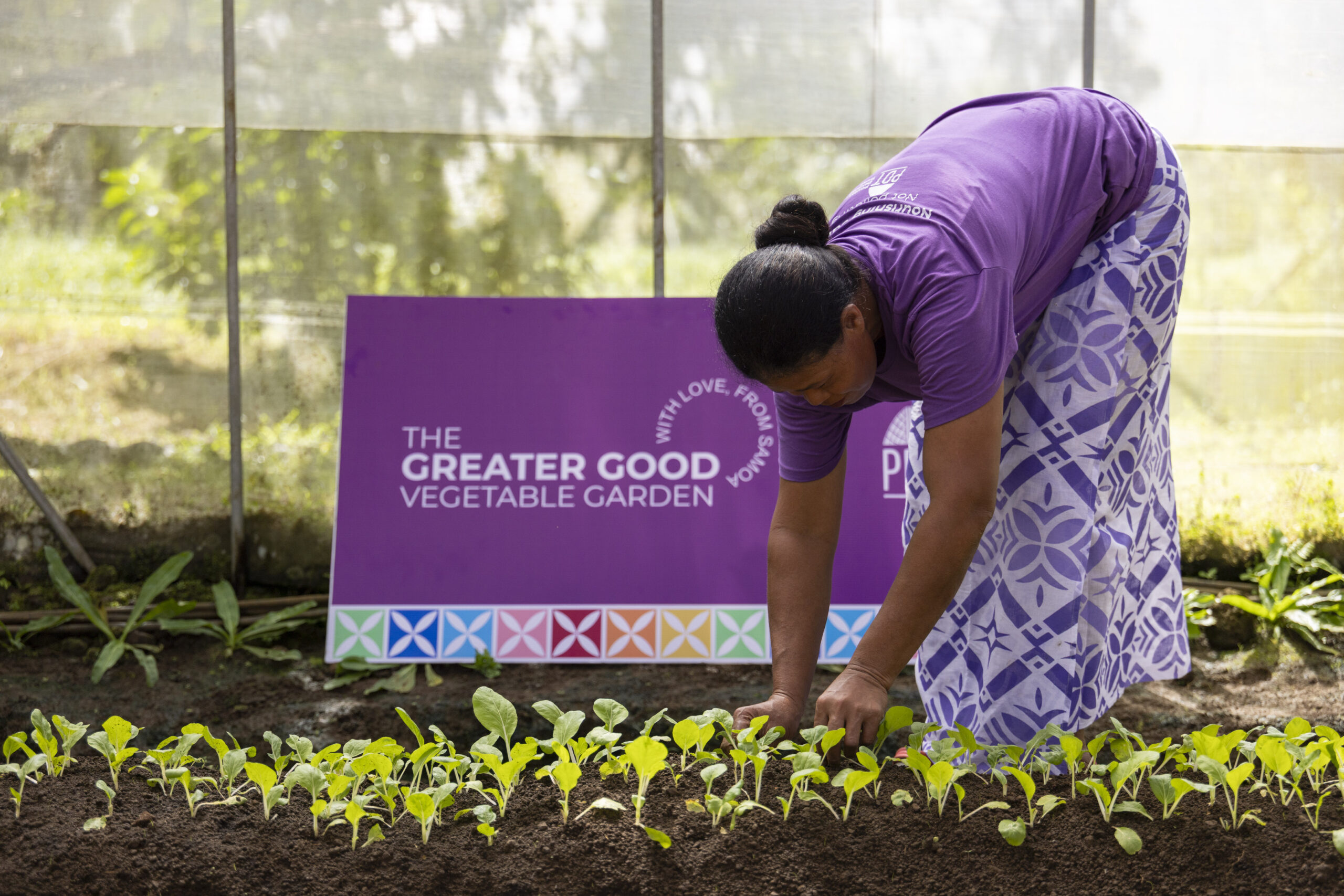
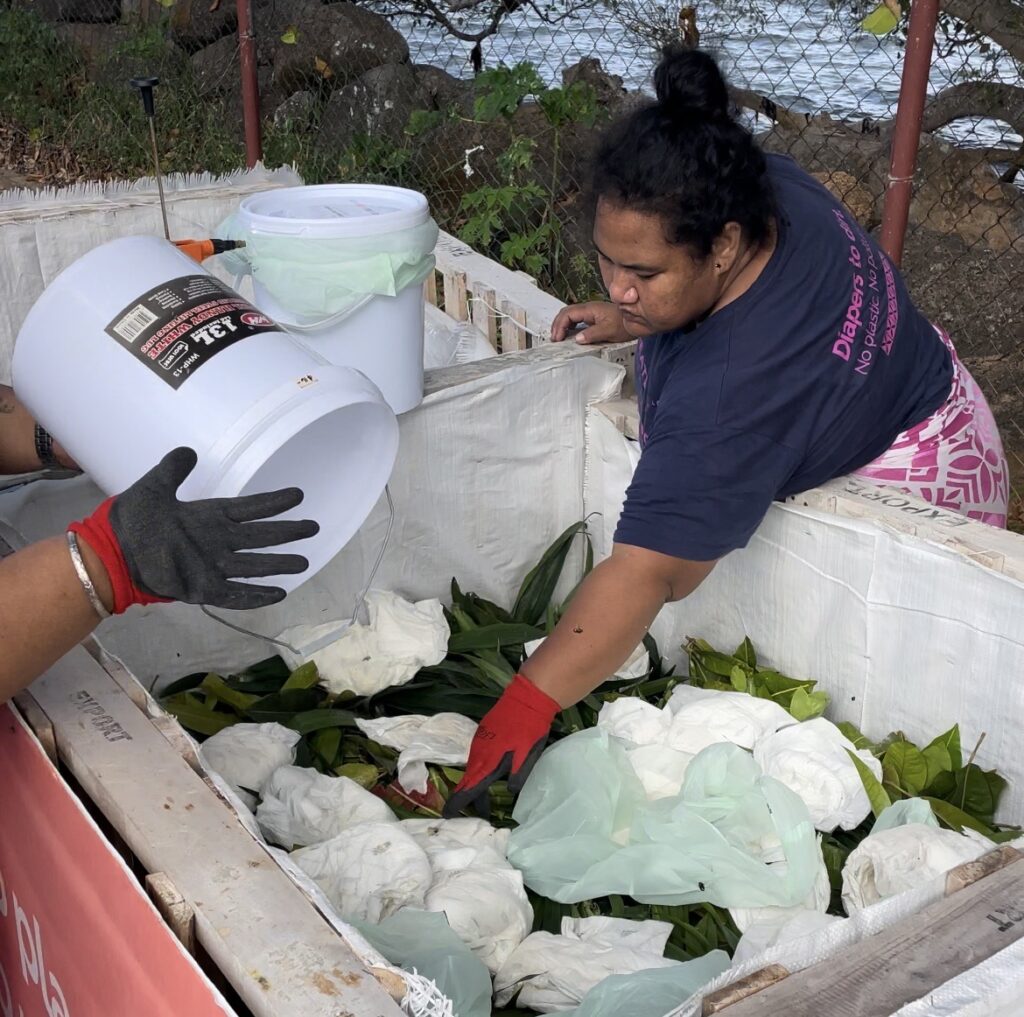
Second, the service infrastructure: a community-embedded collect-compost loop, designed with and for local communities, that transforms a waste liability into an agricultural input. The SPICE composting methodology enables high-quality compost production without expensive equipment, grid power, or industrial infrastructure, conditions routinely absent in outer islands and rural communities across the Pacific.
Third, the financial architecture: Alternative Material Certificates (AMCs), developed by PCX Solutions, enable verified plastic avoidance to be monetised by corporate and government offtakers seeking plastic waste prevention credits. The Greater Good is the first project globally to deploy AMCs. This mechanism creates a pathway to financial sustainability that does not rely solely on aid or philanthropy.
The system is directly relevant to Vanuatu, where plastic diapers represent a significant and growing waste management challenge. The Greater Good conducted a formal scoping mission in Vanuatu in February–March 2026, engaging the Department of Environmental Protection and Conservation, the Ministry of Climate Change, V Organic and Mamma’s Laef, among others, to assess pilot site readiness.
How is this solution innovative?
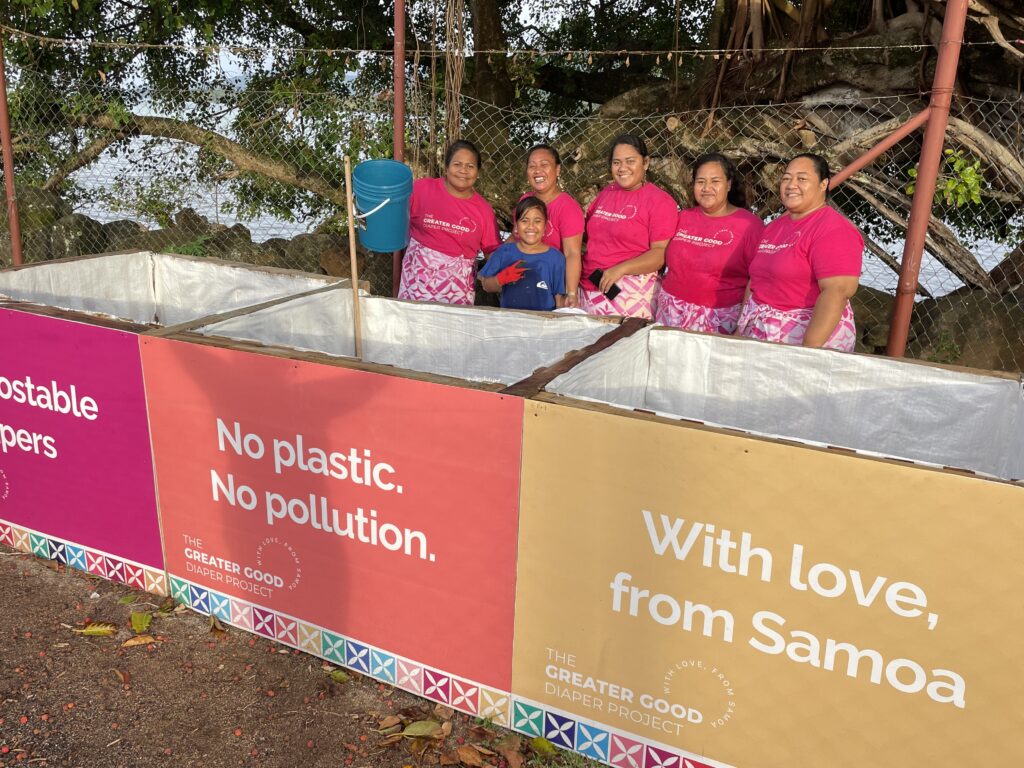
The innovation is not a single technology but a systems integration: the combination of a certified compostable product, a community-based circular service model, and a new environmental finance instrument into a single deployable package for low-infrastructure island contexts. Prior approaches to diaper waste in the Pacific have addressed only one dimension — product substitution (reusable cloth) or waste collection — without closing the loop through verified composting and without creating a financially sustainable operating model. The Greater Good closes all three gaps simultaneously. The SPICE composting methodology is a no-turn, low-infrastructure composting approach that produces verified compost without industrial equipment — a fundamental requirement for islands where power, space, and technical labour are constrained. The use of AMCs as a revenue instrument for plastic waste prevention at household source is without precedent at project scale globally. The co-design model — which positions communities, and in particular women, as co-designers and operators of the collection and composting system — ensures that the innovation is locally owned rather than externally imposed. The programme embedded this approach in Samoa from inception and is applying the same methodology to Vanuatu scoping and design.
How can the innovation be replicated and scaled up in other PICTs?
The model has been designed from inception for replication. The scoping-to-implementation pathway is standardised: a POLP-funded scoping exercise (government and community consultations, waste baseline, composting site assessment, pilot location selection), followed by a formulaic implementation plan, a community co-design workshop, and a container-shipped product and equipment package.
This pathway has been completed in Samoa (operational), Tuvalu (launching June 2026), and Vanuatu with Fiji next in July with SPREP’s Pacific Ocean Litter Project (POLP) funding scoping trips across the region.
The implementation plan template, community engagement framework, and SPICE composting protocols are transferable across jurisdictions with modest local adaptation.
Institutional partnerships with SPREP/POLP, national Departments of Waste Management, women’s councils, and composting partners provide the in-country anchors for each deployment.
Scientific oversight from Bioeconomy Science Institute (New Zealand) scales across countries without proportional cost increase. The AMC financial instrument, once established, generates revenue proportional to enrolled families, creating a per-country self-funding trajectory. Fiscal sponsorship through Humanitas (UK/EU/US) enables grant receipt across diverse donor jurisdictions. The model’s capital requirements decrease materially with each additional country deployment as fixed infrastructure and logistics costs are amortised.
How is the solution cost‑effective and affordable in the context of Pacific Island Countries and Territories (PICTs)?
From the perspective of end users – families with infants, the service is designed to be cost-neutral relative to conventional plastic diapers. Families in Samoa and Tuvalu pay no premium to access the compostable diaper service. The additional cost of compostable materials and the collect-compost service infrastructure is funded through philanthropic capital during the establishment phase, with a structured pathway to financial sustainability by year two through AMC revenue, scale-driven product cost reductions, and partial redirection of existing waste management budgets.
For local governments, the fiscal contribution requested is typically limited to duty and tax exemptions on product imports – a foregone revenue measure offset by avoided landfill costs, extended landfill life, reduced marine environment remediation liability, and enhanced compliance with national waste policy commitments. No capital expenditure or budget allocation is required from government in the initial years.
The Greater Good’s modelled cost per tonne of plastic eliminated declines materially with scale. At the programme’s target operating scale, the cost reaches approximately $1,470 per tonne – significantly below the Alliance to End Plastic Waste ($5,000/t) and The Ocean Cleanup ($4,246/t). This cost advantage is structural: the collect-compost model prevents plastic waste before it enters the environment, eliminating the far higher cost of recovery after the fact. Cost-effectiveness improves further with each additional country deployment as fixed infrastructure and logistics costs are distributed across a larger operational base.
Locations (country, island, or community) where this solution has been piloted and/or implemented
Samoa – The Greater Good Diaper Project and its founders bring two decades of direct experience in compostable diaper product development, composting science, and community service design across multiple geographies, underpinned by Dr Jason Graham-Nye’s PhD research at the Institute for Sustainable Futures, University of Technology Sydney, focused on circular economy frameworks, sustainable consumption, and the systemic conditions required to mainstream compostable diaper solutions in community and policy contexts. Samoa — operational since 2024. Poutasi village, Falealili district, Upolu. Eliminates 700 kg of plastic diaper waste and produces 105 kg of compost per 100 babies per week. Compost quality is independently verified, with scientific oversight provided by Plant and Food Research New Zealand. Tuvalu — national rollout commencing June 2026. Initial deployment of 360 babies in Funafuti, scaling to all islands at full national rollout — 585 babies, approximately 880,000 diapers per year. Collection via Department of Waste Management infrastructure; composting in partnership with the Fatoaga Fiafia Taiwan Gardens and a GG-operated facility. A compostable nappy pilot was previously conducted in Tuvalu in 2020, noted by SPREP as the basis for its subsequent infrastructure recommendations. West Papua, Indonesia — 2021. Village-level circular diaper service piloted by the founders, demonstrating delivery, collection, and composting infrastructure at community scale in a tropical island context directly comparable to Pacific SIDS operating conditions. Vanuatu — scoping completed February–March 2026. Potential pilot sites assessed on Efate (Erakor, Lelepa Island, Tanoliu). Stakeholder engagement conducted with DEPC, Ministry of Climate Change, Vanuatu National Council of Women, V Organic composting facility, Bouffa landfill, and Mamma’s Laef. The Department of Environmental Protection and Conservation has formally endorsed the Greater Good as the implementation pathway for Vanuatu’s legislated ban on disposable diapers. Pilot design in progress.
Learn more:
www.thegreatergood.global
www.atlasdaughters.com/samoa