Wilderlab provides environmental DNA (eDNA) analysis to measure biodiversity from simple water or soil samples, enabling scalable, cost-effective monitoring of ecosystems to support conservation, restoration, and climate resilience efforts.
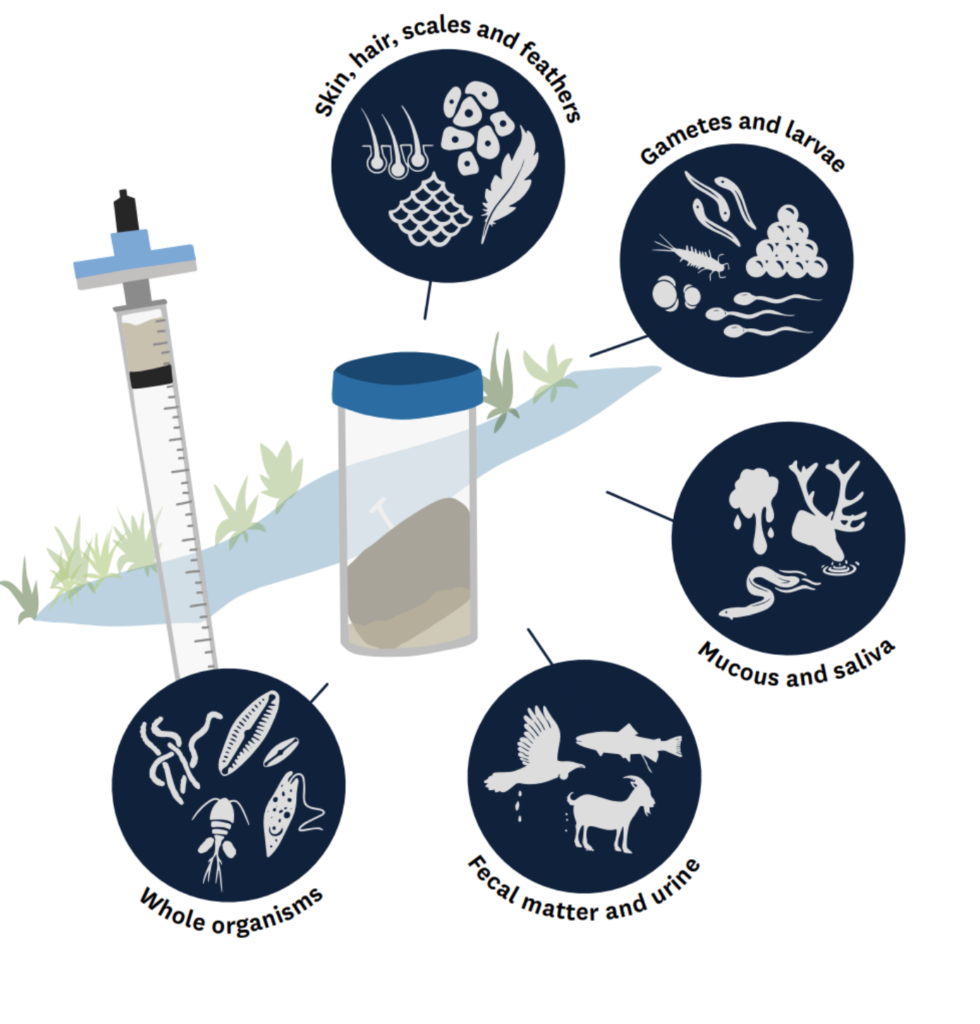
Wilderlab uses eDNA to detect biodiversity across the tree of life from small water or soil/sediment samples. By analysing multiple genetic markers, we can identify fish, mammals, birds, invertebrates, plants and microbial communities from a single sample.
This approach enables broad, repeatable biodiversity monitoring without the need for complex field surveys. It is particularly valuable in remote or logistically challenging environments, where traditional ecological monitoring is costly and difficult to scale.
Our outputs provide clear insights into species presence and ecosystem condition, supporting better environmental decision-making.
How does your innovation specifically apply to the Pacific region and its people?
Pacific Island communities face significant challenges from climate change, including ecosystem degradation, biodiversity loss, and reduced resilience of coastal and marine environments.
Wilderlab’s eDNA approach provides a practical way to monitor biodiversity and ecosystem health using simple, low-impact sampling methods that can be carried out by local teams. This is particularly valuable in remote island contexts where access to specialist survey expertise is limited.
By enabling regular, repeatable monitoring, eDNA helps track how ecosystems are responding to climate pressures such as warming oceans, changing rainfall patterns, and habitat loss. This supports more informed decision-making around conservation, restoration, and sustainable resource management.
The approach is innovative because it captures broad biodiversity signals (from fish to microbes) from a single sample, providing a more complete picture of ecosystem condition. It can also be integrated with community-based monitoring programs, supporting local capacity building and culturally appropriate environmental stewardship.
One of the main challenges in applying eDNA is ensuring sufficient reference data for local species, particularly in biodiverse and under-studied regions such as the Pacific.
We address this by continuously expanding and curating our reference databases, and by working with partners to improve coverage where needed.
Are there examples of this working in the region?
Wilderlab has delivered eDNA monitoring across a range of environments such as freshwater, marine, and terrestrial systems in Australia, New Zealand, and internationally, including the Solomon Islands, Fiji, Tonga, Vanuatu and more.
Projects have included biodiversity assessments for government agencies, conservation organisations, and industry clients, as well as supporting baseline monitoring and long-term ecological studies. Our work has demonstrated the ability to detect a wide range of species, including rare and cryptic taxa, across diverse environments.
We’ve supported a range of projects through partnerships with local organisations and consultancies. For example, we delivered an eDNA workshop in Fiji a couple of years ago, and our services are currently being used by consultancies working on the Tina River Hydropower Project in the Solomon Islands.
More broadly, our approach is to focus on providing robust, accredited eDNA sample processing and molecular expertise, while partnering with organisations on the ground who are better placed to lead engagement and build capacity with local stakeholders. Examples of this include collaborations with Conservation International in Fiji (Lau Island Seascape Project), the Muri Environment Care and the National Environment Service in Rarotonga, as well as a number of smaller projects across the Pacific where we’ve contributed analytical support.
In terms of how the data are applied, eDNA currently offers strong value for early detection of invasive species and for establishing baseline distributions of threatened or culturally important species to inform conservation and environmental management. Looking ahead, there is growing potential to use these datasets to track changes in ecosystem health under shifting environmental conditions, and to support mechanisms such as biodiversity credit schemes.
On local capacity building, our model is intentionally collaborative – rather than centralising all capability, we aim to support regional partners by providing high-quality lab processing and expertise alongside training, knowledge sharing, and integration with local monitoring programmes. We see this as the most practical and scalable pathway in the near term, while recognising that distributed laboratory capacity may become increasingly feasible over time.
How can it be replicated and upscaled in other PICTs?
The approach is highly scalable as it relies on simple, standardised sampling methods that can be deployed across many sites with minimal equipment.
Samples can be collected by local communities, rangers, or field teams with basic training, and then shipped to the laboratory for analysis. This allows biodiversity monitoring programs to be expanded across regions and repeated over time at relatively low cost.
Because the method is standardised, results can be compared across locations and time periods, supporting regional-scale monitoring and collaboration across Pacific Island countries.
What are the next steps for this innovation?
This technology is ready to be used at scale. Wilderlab is focused on expanding the use of eDNA for large-scale, repeatable biodiversity monitoring, particularly in regions where traditional monitoring is difficult to implement.
Future work includes expanding reference databases for Pacific species to improve detection
Abyss Vanuatu Ocean Institute (AVOI) is a science-led, community-driven initiative advancing marine restoration, climate resilience and sustainable blue economy development in Vanuatu. Through its Havannah Harbour pilot, AVOI integrates Reef Ball deployment, artificial reef design, drone-enabled monitoring and workforce training via the Vanuatu Ocean Rangers. The model combines innovation and local stewardship to restore ecosystems, strengthen biodiversity and support climate adaptation. By linking technology, community engagement and practical delivery, AVOI is developing a scalable national framework that helps translate ocean policy into measurable outcomes, creating jobs, building local capability and supporting long-term environmental resilience across island communities.
Abyss Vanuatu Ocean Institute (AVOI) delivers integrated, science-led services focused on marine restoration, climate resilience and sustainable environmental management. Its core services include the design and deployment of Reef Ball artificial reef systems and managed vessel reefs to restore degraded marine habitats, enhance biodiversity and support fisheries recovery. AVOI also provides drone-enabled monitoring and survey services, using autonomous and manned systems to track climate impacts, support conservation planning and improve data-driven decision-making across marine and coastal environments.
A central component is the development of the Vanuatu Ocean Rangers program, which builds local workforce capability in restoration, monitoring, conservation and environmental stewardship. AVOI also supports Marine Protected Area (MPA) design, ecological baseline assessments and long-term monitoring frameworks aligned with national ocean policy objectives.
Through community engagement, eco-tourism integration and applied innovation, AVOI connects environmental protection with economic opportunity. Its Havannah Harbour pilot serves as a scalable model to deliver practical climate adaptation, strengthen ecosystem resilience and enable coordinated, whole-of-government environmental outcomes across Vanuatu.
The Innovation
One of AVOI’s key innovations is the integration of the Vanuatu Ocean Ranger program with locally delivered marine restoration systems, including Reef Ball fabrication and deployment. This model combines workforce development, community engagement and practical restoration into a single, scalable framework designed for island environments.
Through structured Vanuatu Ocean Ranger Camps, over a 3 day period AVOI identifies and trains local Ni-Vanuatu participants in marine conservation, Scientific diving, restoration techniques, monitoring and stewardship. One aspect of the Rangers responsibilities is to support the fabrication and deployment of Reef Ball artificial reef systems using locally sourced materials and regional supply chains, significantly reducing costs and increasing local ownership. The approach enables degraded reef systems to be restored while simultaneously building in-country capability and employment pathways, guided by our National AVOI Play Book at its core.
This innovation directly addresses climate change by strengthening reef resilience, supporting fisheries recovery and enhancing coastal protection against storm surge and extreme weather events. It also improves ecosystem health, which is critical for food security and long-term adaptation in Pacific Island Countries and Territories (PICTs).
What makes this model particularly relevant for PICTs is its practicality and scalability. It does not rely on high-cost external inputs but instead builds local capacity, integrates customary stewardship and aligns with government policy frameworks. The system can be replicated across islands using a consistent training, deployment and governance approach.
Supported by drone-enabled monitoring and AI self learning data collection, AVOI’s model provides a cost-effective, community-led solution that connects restoration, climate resilience and sustainable economic opportunity in a way that is both locally grounded and nationally scalable.
How is this solution innovative?
AVOI’s solution is innovative because it integrates community workforce development, marine restoration and applied technology into a single, scalable delivery model tailored for island environments. Rather than treating conservation, employment and climate adaptation as separate challenges, AVOI combines them through the Vanuatu Ocean Ranger program and locally delivered Reef Ball restoration systems. This creates a practical pathway where communities are directly trained and employed to restore and monitor their own marine ecosystems. The model also incorporates drone-enabled monitoring and emerging AI-supported survey systems to improve data collection, ecological tracking and rapid response capability, including in remote and disaster-affected areas. This blend of low-cost, locally sourced restoration methods with advanced monitoring technology allows for both accessibility and scientific rigour. What makes the approach particularly innovative is its focus on scalability and replication. By developing a standardised training, deployment and governance framework, AVOI provides a repeatable model based on a National AVOI Play book that can be adapted across Pacific Island Countries, helping translate policy into measurable, community-led climate and environmental outcomes.
How can the innovation be replicated and scaled up in other PICTs
AVOI’s model is designed for replication across Pacific Island Countries and Territories (PICTs) through a structured, partnership-driven and capacity-focused approach. Following an initial two-year proof-of-concept in Vanuatu, AVOI will develop a refined National PICT Playbook outlining standard operating procedures (SOPs) and safe work method statements (SWMS), delivered in both English and Bislama, with visual and pictorial elements to ensure accessibility across diverse communities.
Scaling will be enabled through institutional partnerships with government agencies, regional bodies, scientific partners such as UTS, and local stakeholders, supported by blended financing models including public-private partnerships, eco-tourism revenue streams and conservation funding.
A key component is the development of a simplified, citizen science-based survey framework focused on key indicator species. This approach lowers technical barriers, enabling participation from communities with varying levels of formal education while strengthening data collection and stewardship.
By combining local workforce training, accessible science, and standardised systems, AVOI creates a practical, low-cost model that can be adapted regionally, empowering communities while supporting climate resilience, biodiversity restoration and sustainable economic development across PICTs.
Is your solution cost‑effective and affordable in the context of Pacific Island Countries and Territories (PICTs)?
AVOI’s solution is designed to be highly cost-effective and affordable for communities, local governments and small operators across PICTs. A core principle of the model is the use of locally available materials, including aggregates from regional quarries and, where appropriate, surplus or repurposed government materials. This significantly reduces construction and deployment costs for Reef Ball systems and associated infrastructure.
From an end-user perspective, the model lowers financial barriers by building local capability through the Vanuatu Ocean Ranger Camp Initiative and subsequent program, reducing reliance on external expertise and enabling communities to deliver and maintain restoration activities themselves. The integration of eco-tourism also creates revenue-generating opportunities that can help offset ongoing costs.
Affordability is further strengthened through the development of a streamlined cross-departmental approval pathway within the AVOI Playbook. By providing clear guidance on site selection, environmental considerations and standardised processes, local governments can reduce delays, duplication and administrative costs, enabling more efficient project delivery at scale.
Together, these elements create a low-cost, accessible and sustainable model that is practical for widespread adoption across PICTs.
Where is this being piloted?
AVOI’s solution is being piloted in Vanuatu, with Havannah Harbour (North-West Efate) identified as the primary proof-of-concept site, supported by a permanent operational and training hub at Lot 149, Lapita Estate. While over 1,000,000 Reef Balls have been deployed globally across more than 80 countries, this will be the first integrated deployment of this system in Vanuatu. The pilot combines initial baseline surveys across 12 regions using Reef Life Survey (RLS Methodology) prior to any deployments. Once 6 of the sites are selected for deployment we will deploy 50m x 10m of Reef Ball habitat restoration—designed as a 500+ year solution—, allowing us to. Continue to conduct 6 monthly replicated surveys in exactly the same 50m transects to demonstrate recruitment changes providing proof of concept. Together with the Vanuatu Ocean Ranger program, which trains and employs local Ni-Vanuatu to deliver restoration, monitoring and stewardship, supported by drone-enabled surveying, community engagement and eco-tourism integration. The approach is intentionally holistic, linking marine restoration, climate resilience, workforce development, local supply chains and government coordination into a single, place-based model. The Havannah Harbour pilot will be used to refine systems, demonstrate measurable outcomes and establish a scalable framework for national and regional replication across PICTs, through the development of our AVOI National Playbook, helping guide replication across all our satellite sites. Initial training will be conducted through AVOI Headquarters in Havannah Harbour, with Ranger selection conducted through a multi-day conservation camp where participant will all leave with new knowledge and appreciation for the terrestrial and marine environment, and Ocean Rangers selected for employment within the AVOI team at the conclusion of the camps.
Report
There was a problem reporting this post.
Block Member?
Please confirm you want to block this member.
You will no longer be able to:
See blocked member's posts
Mention this member in posts
Invite this member to groups
Message this member
Add this member as a connection
Please note:
This action will also remove this member from your connections and send a report to the site admin.
Please allow a few minutes for this process to complete.