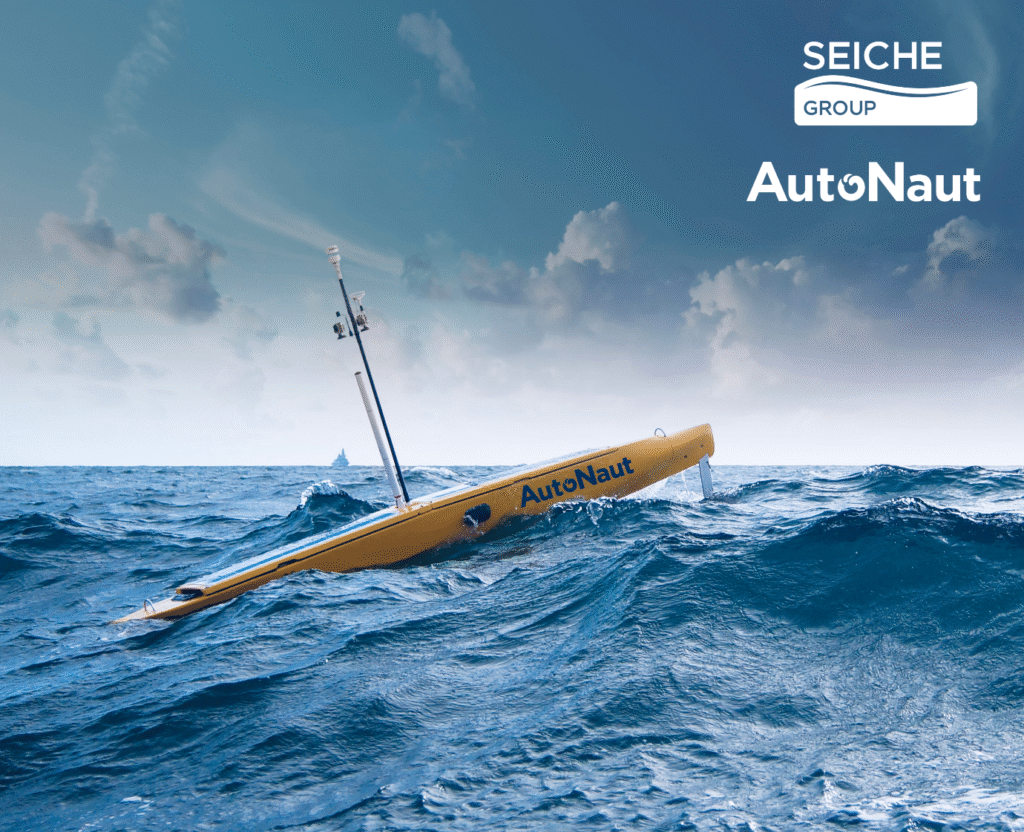
AutoNaut is a wave-propelled, solar-assisted Uncrewed Surface Vessel (USV) developed by Seiche Group. It is a zero-emission, long-endurance ocean platform capable of collecting critical climate, environmental, and marine data without the need for crewed vessels.
The vessel operates silently for months at sea, carrying a range of modular sensors, from meteorological and oceanographic instruments to acoustic monitoring systems. This makes AutoNaut a cost-effective and sustainable solution for climate science, weather forecasting, ocean health monitoring, and environmental protection.
The innovation addresses the growing need for persistent, safe, and low-carbon monitoring solutions in a time when ocean data is increasingly vital for understanding and adapting to climate change.
Outcomes include:
Continuous, real-time data to improve weather forecasting and storm prediction
Support for marine biodiversity monitoring and protection
Reduced operational costs and risks compared to crewed ships
Contribution to global climate resilience goals through sustainable ocean observation
How does your innovation specifically apply to the Pacific region and its people?
Pacific Island nations are on the frontline of climate change, facing intensifying cyclones, sea level rise, and changing ocean conditions. These challenges demand accurate, long-term data to guide adaptation strategies and protect communities.
AutoNaut is ideally suited to the Pacific because:
Storm resilience: It can operate safely in extreme conditions where crewed vessels cannot, helping improve hurricane and cyclone forecasts.
Accessibility & cost-effectiveness: Many islands lack large research fleets. AutoNaut offers a low-cost, low-maintenance option for continuous ocean monitoring.
Environmental compatibility: Silent, zero-emission operation supports cultural and ecological values tied to ocean stewardship.
Flexibility: The platform can be tailored with local sensor needs, from fisheries monitoring to coastal protection studies, strengthening regional self-reliance.
By providing timely, reliable data, AutoNaut supports disaster preparedness, fisheries management, and environmental resilience across the Pacific.
What are the next steps for this innovation?
We are currently advancing development of the new 12m AutoNaut USV, designed with greater power, endurance, and payload capacity. This next-generation vessel will:
Carry heavier and more diverse sensor suites (meteorological, hydrographic, acoustic, defence/security).
Operate in compliance with evolving maritime regulations for autonomous vessels.
Expand mission scope from coastal monitoring to deep-ocean, long-duration deployments.
Deliver enhanced communications, data handling, and operational resilience.
Our immediate next steps include:
Securing demonstration opportunities in the Pacific to show capability in local waters.
Building partnerships with regional governments, NMHS, and international agencies to integrate AutoNaut into climate resilience frameworks.
Exploring funding support (e.g., CREWS, WISER, GCF) to scale deployments and provide shared platforms for multiple Pacific stakeholders.
Our vision is a fleet of AutoNauts across the Pacific, delivering the real-time data needed to protect lives, livelihoods, and ecosystems in a changing climate.
Please note:
This action will also remove this member from your connections and send a report to the site admin.
Please allow a few minutes for this process to complete.